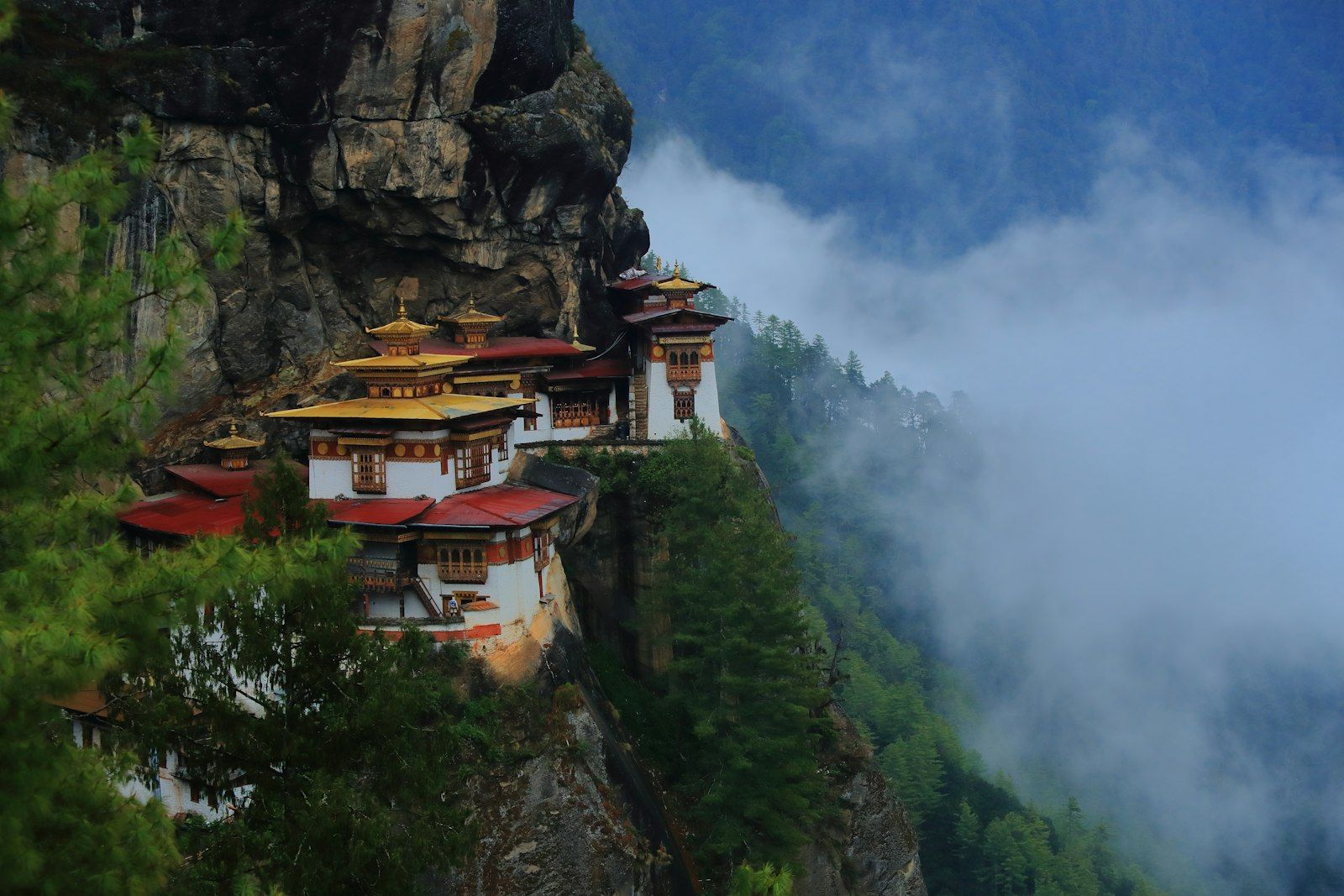
About Bhutan
Bhutan is a Himalayan kingdom of prayer flags, fortress monasteries and forested valleys, and one of the calmest places you can visit from India. There are no traffic lights in the capital, buildings follow traditional design, and much of the country is protected forest.
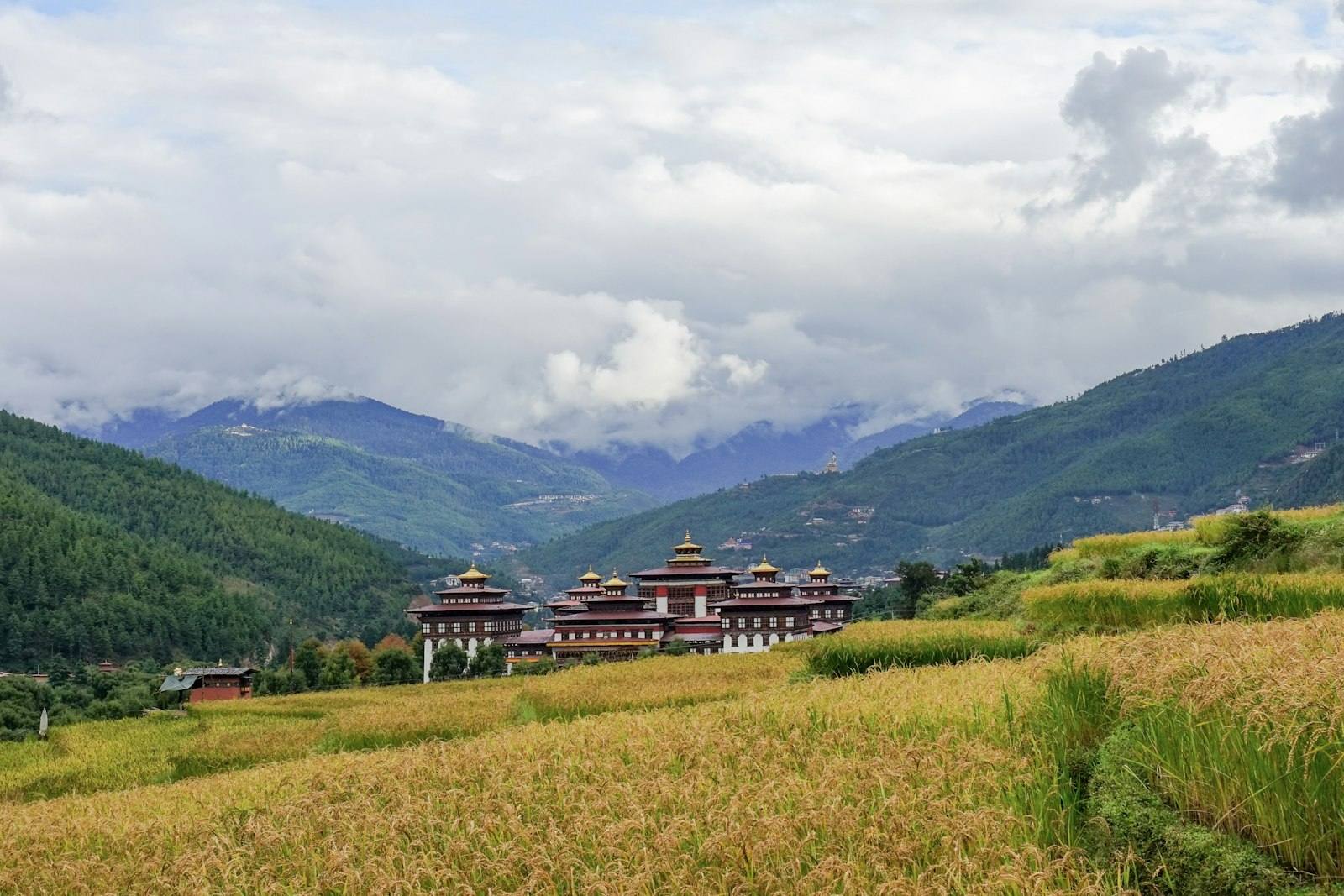
A first visit usually covers Paro, where the Tiger's Nest monastery clings to a cliff, the capital Thimphu, and Punakha with its riverside dzong. With more time, add the Phobjikha valley or Bumthang in the centre of the country.
Indian citizens do not need a visa. You need an entry permit and pay a daily Sustainable Development Fee, both of which we arrange for you.
Couples
Quiet valleys, farmhouse dinners and hot stone baths.
Families
Short drives, easy walks and a culture children find fascinating.
Slow travellers
Monasteries, hikes and very little rush.
Best time to visit Bhutan
- JanGood
- FebGood
- MarBest
- AprBest
- MayBest
- JunOff season
- JulOff season
- AugOff season
- SepGood
- OctBest
- NovBest
- DecGood
BestGoodOff season
Spring
March to May
Rhododendrons bloom and the weather is mild. Paro's famous festival usually falls in spring.
Autumn
September to November
Clear skies and mountain views. The Thimphu festival usually takes place in autumn.
Winter
December to February
Cold but sunny days, fewer visitors and black-necked cranes in Phobjikha.
Monsoon
June to August
Rain and occasional landslides, but green valleys and lower prices.
How to reach Bhutan
Paro is Bhutan's only international airport, with flights from Delhi, Kolkata, Bagdogra and a few other Indian cities on Drukair and Bhutan Airlines. The approach between mountains is one of the most dramatic landings in the world.
By road, travellers enter at Phuentsholing from Jaigaon in West Bengal, about four hours from Bagdogra airport. From Phuentsholing it is about five to six hours to Thimphu.
Entry for Indian passport holders
Indian citizens do not need a visa for Bhutan. You need an entry permit, issued online or at the point of entry, using a valid Indian passport or Voter ID card.
Indian tourists pay a Sustainable Development Fee of ₹1,200 per person per night. Children under 6 are exempt and children aged 6 to 12 pay half. Permits for areas beyond Thimphu and Paro, such as Punakha, are arranged with your itinerary.
Checklist
- Passport or Voter ID valid for at least 6 months
- Entry permit and Sustainable Development Fee paid
- Hotel bookings for every night
- Passport-size photos for permits
Entry rules can change. We confirm the current requirements for your dates before you book.
Places to visit in Bhutan
- 1
Paro
Tiger's Nest monastery, Rinpung Dzong, the National Museum and Kyichu Lhakhang. - 2
Thimphu
The giant Buddha Dordenma, Tashichho Dzong, the weekend market and the takin reserve. - 3
Punakha
The beautiful Punakha Dzong at the meeting of two rivers, and a long suspension bridge. - 4
Dochula Pass
108 memorial stupas and, on clear days, a view across the Himalayas. - 5
Phobjikha valley
A wide glacial valley and winter home of the black-necked cranes. - 6
Bumthang
The spiritual heart of Bhutan, with old temples and apple orchards.
Things to do in Bhutan
Hike to Tiger's Nest
About 4 to 5 hours return, with a café halfway. Ponies can carry you part of the way.Hot stone bath
A traditional farmhouse bath heated with river stones.Dress in a gho or kira
Try on Bhutan's national dress for photos in Thimphu.Archery
Watch the national sport, played across long distances with great ceremony.Rafting in Punakha
Gentle rafting on the Mo Chhu river below the dzong.
Where to stay in Bhutan
Paro
Valley-view resorts and some of Bhutan's most luxurious lodges.
Thimphu
Comfortable city hotels close to the market and dzong.
Punakha
Riverside resorts among rice terraces.
Sample Bhutan itineraries
5 nights: Paro, Thimphu and Punakha
- Day 1Arrive in Paro, drive to Thimphu
- Day 2Thimphu sights
- Day 3Dochula Pass to Punakha
- Day 4Punakha Dzong, drive to Paro
- Day 5Tiger's Nest hike
- Day 6Departure from Paro
7 nights: Bhutan with Phobjikha
- Day 1Arrive in Paro, Thimphu
- Day 2Thimphu
- Day 3Punakha
- Day 4Phobjikha valley
- Day 5Return to Punakha
- Day 6Paro
- Day 7Tiger's Nest hike
- Day 8Departure
Every itinerary can be changed to suit your dates, pace and who is travelling.
Bhutan travel tips
- Do the Tiger's Nest hike on your last day in Paro, once your body has adjusted to the altitude.
- Dress modestly in dzongs and temples: long sleeves and long trousers or skirts.
- Smoking in public places is restricted, and tobacco carried in must be declared.
- Indian rupees are widely accepted, but carry smaller notes; higher-value notes are not always taken.
Bhutan FAQs
Do Indians need a visa for Bhutan?
No. Indian citizens need an entry permit, which can be issued with a valid Indian passport or Voter ID card.
How much is the SDF for Indians in Bhutan?
Indian tourists pay a Sustainable Development Fee of ₹1,200 per person per night. Children under 6 are exempt and children aged 6 to 12 pay half.
What is the best time to visit Bhutan?
March to May and September to November, for mild weather and clear mountain views.
How difficult is the Tiger's Nest hike?
It is a steady climb of about 4 to 5 hours return. Most reasonably fit travellers manage it at their own pace, and ponies can carry you up the first part.
How many days are enough for Bhutan?
Five nights covers Paro, Thimphu and Punakha. Seven nights lets you add the Phobjikha valley.